
Where Navigation and Precision Collide: Inside the 2025 Sniper Adventure Challenge
Posted by Michael Wax Feb 17th 2026
They say that the Mammoth Sniper Challenge is one of the “toughest competitions on the planet.” This is true except for those of us who have competed in the Competition Dynamics Sniper Adventure Challenge. At the SAC, there’s a lot more at stake since teams have to navigate in rugged terrain over the course of 36–48 hours to find control points using only a map and compass, complete challenges that the match director and his buddies dream up to make competitors suffer, and shoot at targets that, while not always hard to find, always have a twist to them that challenges even the toughest of competitors.
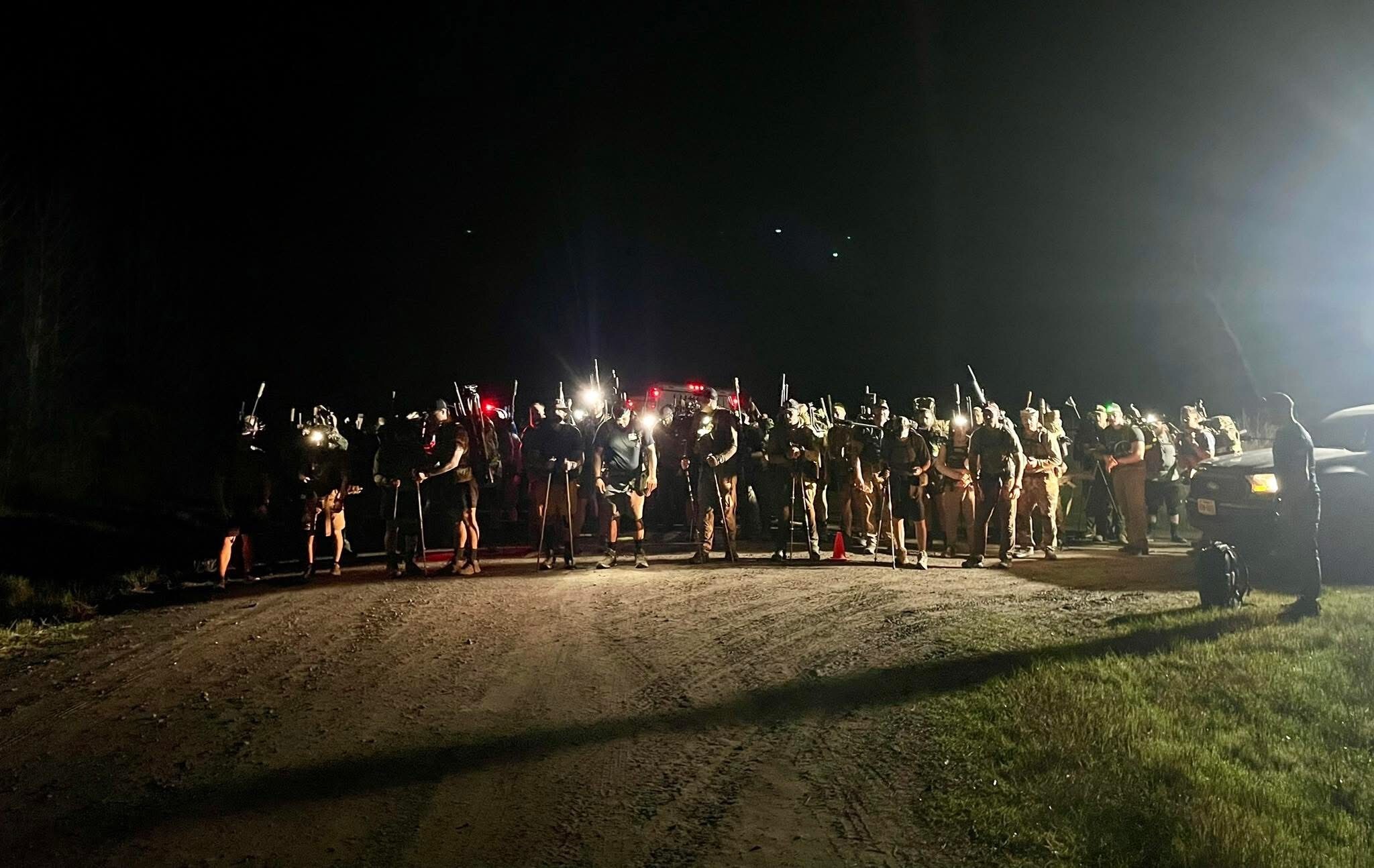
To provide a little context, the Sniper Adventure Challenge is not a shooting competition even though there are at least 8 shooting stages. It is an adventure race with guns. This means that the primary goal of the competition is to plot and navigate to, using only map and compass, various land navigation control points that comprise a “mission.” To complete a mission, a team must collect (or punch) all of the punches that are provided on the mission list. However, each year is different—in years past, all of the mission punch locations have been given at the beginning, where teams are required to hit them in order. In other years, only half of them have been given and, when you reach the last one on the list, more points are listed on a placard that you have to write down and then find. Supposedly there is something new in the works for 2026. This is what we (my racing partner McCall Stephens and I) encountered at the 2025 Sniper Adventure Challenge.
Driving into the Wills Ranch in Douglas, WY, was scenic as we drove towards Sheep Mountain and then hung a left, crossing the foothills that serve as the open range to several cattle ranching operations. Skirting the southeast tip of the mountain and turning west, a valley stretches for miles, and we knew that, at some point, we would be walking either the entire length of it or up and over the south ridge, which means pressing through scrub oak. For now, our drive was calm over the dirt road, and the air conditioning was just what we needed on the early September morning.
Check-in was SOP, and we received our map and land navigation punch cards and made sure our SPOT tracker was powered on and functioning. A brief safety meeting at 8:00 a.m., and the initial mission coordinates were passed out. I had hustled to the front to be one of the first to get them so we could begin plotting our route and hopefully be ahead of the other teams. From competing in this event for the past 6 years, a quick start can usually be a good thing, unless you make mistakes. To be sure, our initial plotting led to having to backtrack, and it would certainly not be our last error of the race.
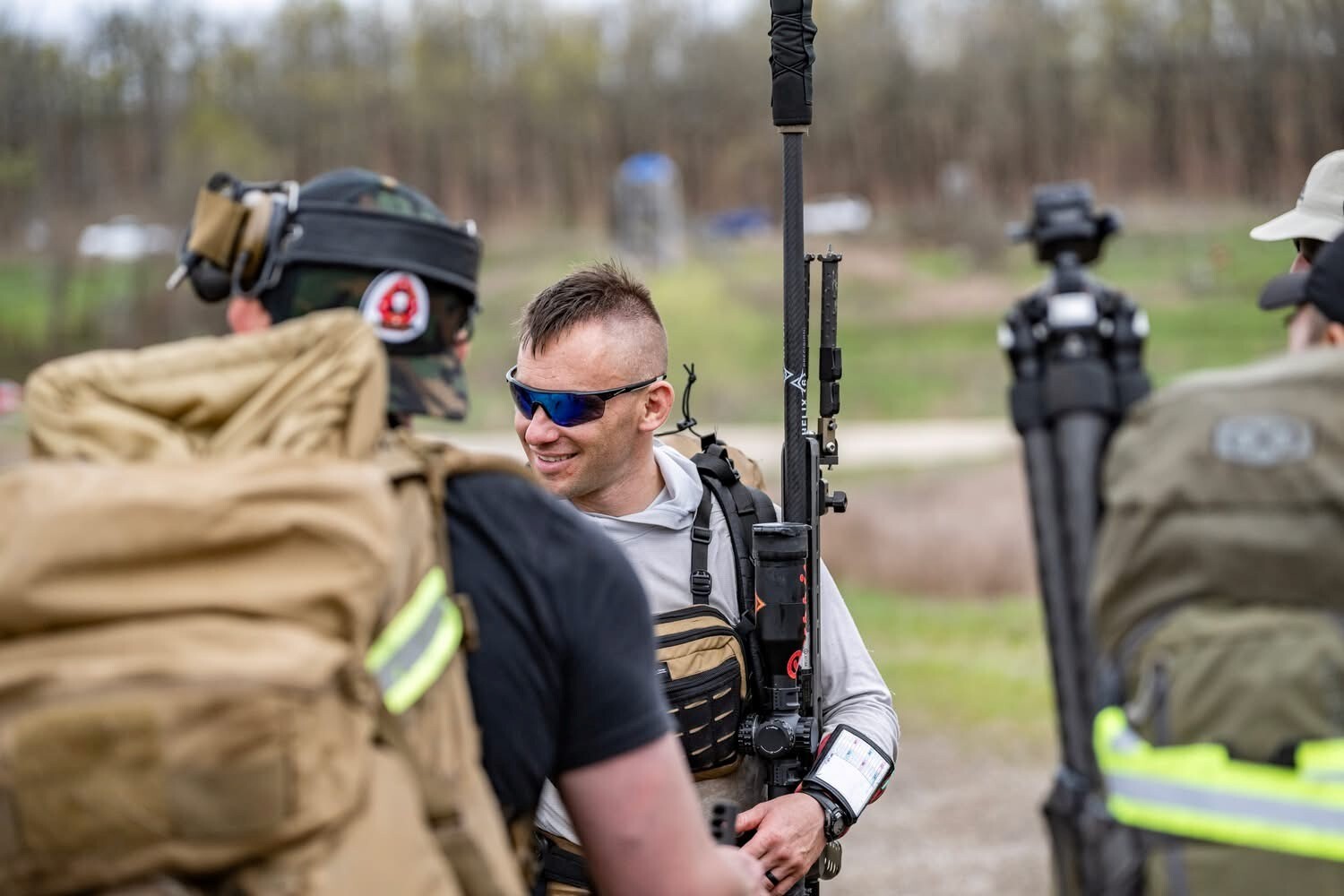
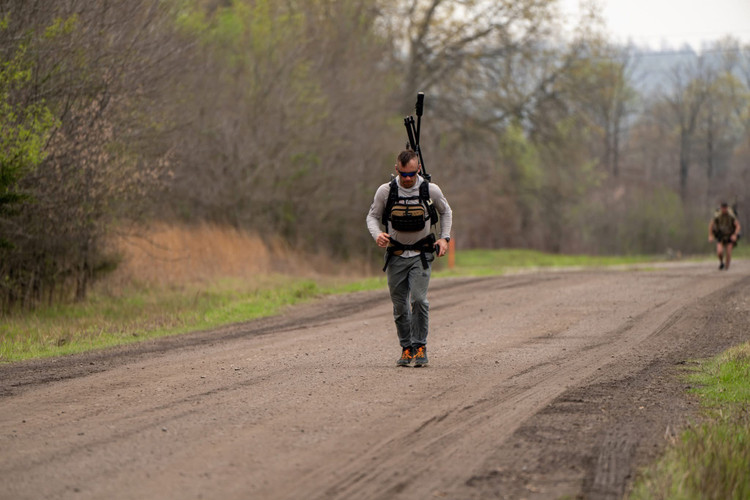
As we navigated the course, sometimes crossing over barbed wire fences or following cattle trails, or simply bushwhacking across the open range, we found ourselves at the first shooting location at the base of Sheep Mountain. This particular year, McCall wanted to be the primary shooter, which meant that he had to shoot a .243 caliber round minimum. Since we wanted to run light (no one wants to carry more weight than they have to for this event), he chose to use my 6mm ARC rifle, sporting a 26” Helix 6 Precision barrel and firing 95gr TMKs from Sierra at 2900 fps. As the secondary shooter, I chose to run an AR platform with an 18” Helix 6 Precision barrel in .223 Wylde, shooting 77gr TMKs at 2400 fps.
While there were several shooting stages, our favorite was the one hosted by Mr. Dodd. We arrived at the scene where we were instructed that a notorious drug lord was the target and we had precious little time to eliminate the target. It turns out that the IPSC-sized target was at about 950 yards, and we were only able to take a few shots at it before we were informed that, because we failed to neutralize the target, our friend had been hit by return fire and we had to carry him to safety and assess his wounds, then get him ready for medical evacuation. After successfully using our kit to patch his wounds and getting him to the extraction area, we were then able to resume engaging the other targets that were at random ranges. We were able to, with the remaining stage time left, clean the targets and earn a good score for the stage.

A second fun stage where it was good we were shooting quality rifles and ammo was when we each had to engage a troop line of targets at unknown distance. With tricky winds, I was able to clean my targets, which turned out to be around 700 yards out. McCall then quickly cleaned the plates as well since I was able to provide him some much-needed wind correction. I was glad that we had packed enough ammunition and, by the end of the shooting, we still had plenty left, which was not as much fun since we had to get back to rucking. Fast-forward another 20 hours later, after finding punches halfway up a windmill, tucked inside of juniper bushes, and in the middle of creeks, we had some big things go wrong before we were able to come back and shoot even more stages.
The match director of the SAC and owner of Thunder Beast Arms, Zak Smith, jokingly says each year, “don’t die.” This is tongue-in-cheek because there have been years past where people have nearly fallen down mountains, become disoriented with dehydration, and unknowingly walked into live-fire no-go zones because they couldn’t read a map and got lost. This year, we were crossing a very low fence on the way to a punch location when a large slab of sandstone broke under McCall’s foot and he fell. Hard. He landed on his side on another rock, and part of the broken sandstone boulder rolled onto his leg. After clearing the rock and helping him up, we continued slowly and cautiously, making sure that nothing was broken. Satisfied, we figured with our several land navigation errors (costing us time and energy) and the toll that the miles and fall had taken, that we decided to head back towards HQ and collect any easy points we could.
We completed the hilarious “Cantina” stage that Peter Johnson of Archway Defense called a “s*** show” (Objective: infiltrate the cantina and extract primary target and neutralize any hostiles [which were armed with airsoft pistols as well]. Recover intel/evidence. Time limit: 5 minutes. Equipment: two airsoft pistols with 8 rounds each) and the improvised weapons challenge, then hobbled our way back towards HQ, picking up an additional 2 land-nav points. We trudged slowly and figured that with all of the errors, there’s no way we could beat last year’s winners who were miles ahead.
At the awards ceremony, when all of the land-nav points were tallied and the challenge scores normalized, we were beyond shocked to learn that we took first place! McCall’s back was messed up and both our feet hurt like hell, but we were told that our shooting had really set us apart and our challenge scores made the difference. What a finish to what we thought was a disaster of a race for us—I picked up my third win at the SAC and McCall his first. We are excited about fixing our mistakes and putting on an even more dominant showing in September 2026.
